Monday, January 30, 2012

Confirmation Review: How witnesses messed up Ocampo 4 and helped confirm the cases


By NZAU MUSAU

WITNESSES relied on by ICC suspects at the confirmation of charges hearings last year proved counterproductive to their interests as judges either dismissed their evidence or used it to confirm prosecution claims.

The devastation caused by witnesses cut both-ways in the case against Uhuru Kenyatta and Francis Muthuara as well as the other against William Ruto and Joshua arap Sang. It was however more devastating in the Uhuru and Muthaura case.

President Mwai Kibaki and Comptroller of State House Hyslop Ipu's witness statements denying Mungiki link in the State-House meeting succeeded in proving a meeting with some “youth” did take place.

A list of visitors to State House on November 26th, 2007 provided by Ipu on behalf of Muthaura was found to be of “no assistance to the chamber in the determination of the matter” because two other youthful witnesses of Uhuru attested that it was not conclusive.

Ipu himself admitted that the list was not exhaustive leaving a room that other visitors of Mungiki affiliation as alleged by the prosecution could have been at State House on that day.

Ambassador Yvonne Khamati account that she met the president and Muthaura at a State House boardroom at around 10.00am of that day for about an hour did not help. Another Uhuru witness also claimed to have met the president together with others at around the same time.

“The Chamber is of the view that no conclusion could be drawn from these witnesses’ statements as to the unreliability of the evidence provided by Witness OTP‐4, since they seem to refer to a meeting other than that with the Mungiki mentioned by Witness OTP‐4,” the judges concluded.

More damaging was statement from another Uhuru witness who was a coordinator of “operation Kibaki again” who confirmed that he attended the State House meeting with others among them Maina Kang'ethe aka Diambo but as representative of “operation Kibaki Again”.

The judges said they had noted that the same individuals mentioned by this particular witness as members of “Operation Kibaki Again” were the same individuals whom Ocampo's witnesses “place in attendance of the meeting as representatives of the Mungiki.”

Moreover, the judges said different sources indicated that this lobby- Operation Kibaki Again, appears to have operated as a cover group for Mungiki activities during the election campaign. Yet another defence witness only labelled D12‐37 confirms his participation in the meeting.

“This witness also confirms that the same people mentioned by Witness OTP‐4 attended the meeting at
State House as well as the fact that Maina Kangethe Diambo was a member of the Mungiki at the relevant time,” the judges said.

Phone records of conversations tabled by two Muthaura witnesses to dispute that he called police commissioner Hussein Ali were doubted on the basis that Muthaura could have used another number since the number whose records they tabled was not registered under Muthaura.

“The Chamber does not find persuasive the statement of Beatrice Muriithi (D12‐42) that “Mr. Muthaura has only one mobile telephone”since it does not exclude the possibility of Mr. Muthaura using another phone number without the witness being aware of this and given the powerful position of
Mr. Muthaura vis‐à‐vis the witness,” the judges said.

Muriithi statement to the effect that Muthaura being a Meru could not have spoken Kikuyu or identify himself with Kikuyu community could not be believed as according to the court, evidence tabled before it had shown that Kikuyu and Kimeru are “mutually intelligible.”

Moreover Muriithi said she had never heard Muthaura speak Kikuyu. The judges said the fact that she has never heard him speak Kikuyu does not mean he is not able to speak Kikuyu.

Muthaura's witnesses from Nairobi club- one of the alleged venues of the planning meetings- did not help him. The staff would not provide the names of the people who had breakfast there because of their hotel policy on non-disclosure.

Government spokesman Dr. Alfred Mutua's testimony to Muthaura's alibi that he did not attend the Nairobi Club meeting was deemed “selective and speculative”. And so was the evidence by Muthaura's drivers and security.

“Indeed, the Chamber cannot accept the proposition that the two of them would always know Mr. Muthaura’s movements and activities,” the judges said. Two other witnesses who disputed that Muthaura made a call to former police boss also lost out.

Michael Kagika, an administrative officer in State House disputed there was no such a meeting at State House because no tents were erected for that purpose as claimed by the witnesses. He however told the judges that he arrived at State House in the afternoon of that day.

“Considering this and also the fact that the witness was not a high‐ranking officer, and thus it cannot be assumed to have been privy to everything which occurred at State House, especially in his absence, the Chamber considers that the statement of Michael Kagika (D12‐8) cannot have decisive force in the determination of the matter at issue,” the judges said.

The testimony of another Uhuru witness that the deputy PM was at a PNU affiliates meeting at KICC in the morning of 26th and later lunched with him at Intercontinental was dismissed because the individual did not “give clear indication of the source of his knowledge.”

Another of Uhuru's witnesses mixed up the date of Kibaki's swearing in ceremony between December 30 and 31, 2007 but the chamber excused him. It nevertheless said the witness was extremely vague on the timing of Mr. Kenyatta’s movements.

Turning on to the Ruto case, the oral and written testimony of former presidential escort commandant Samson Cheramboss and evangelist Reverend Kosgei was accorded a low probative value by the judges owing to their alleged prominent role in the planning of the violence.

Both when they appeared at the confirmation of charges denied ever attending any planning meetings with Cheramboss making a categorical statement that he had never met Ruto nor been at his house.

“Given the circumstances surrounding Mr. Cheramboss, in terms of his alleged involvement in the planning of the attack during the different meetings as one or more of the Prosecutor's witnesses testified, the Chamber considers that the probative value to be attached to his testimony is lowered,” the judges said in their Monday ruling.

They said the different witnesses had described in detail the active role played by Cheramboss during the various meetings within the alleged network.

With regard to Reverend Kosgei, the judges said the circumstances surrounding his alleged involvement in the chaos implies an interest in denying his presence in the meetings and therefore his evidence could be relied upon a lot.

“Moreover, Reverend Kosgei is reported to have made a derogatory speech during a planning meeting, passages of which are quoted in detail by Witness 8,” the judges said.

Consequently, the judges went on to believe the witnesses that the said preparatory meetings including the one held on April 15, 2007 and in which macabre oaths of slaughtered dogs were administered could have taken place.

Kosgey had told the court last year that Kalenjins fear oaths and that dogs are considered abominable animals are therefore not involved in Kalenjin ceremonies. Instead, he said rams were used in traditional sacrifices by the community.

Even this explanation would not convince them that the meeting did not take place: “The Chamber has already explained in paragraph 118 its position on the testimony given by this particular witness in the specific circumstances outlined above.

Accordingly, the Chamber does not consider that the asserted discrepancy between the references to dogs as the animals used during the 15 April 2007 meeting and the testimony of Reverend Kosgei in that regard is of such a nature as to invalidate the credibility of the testimony of Witness 8 in relation to the 15 April 2007 meeting,” they said.

Kosgey's derogatory meeting alleged delivered at a speech he made in September 2, 2007 and given as testimony by witness 8 was considered too “precise and detailed” to be denied by the clergyman whose evidence was already doubted.

Cheramboss is cited by several witnesses as having played a significant role in the planning meetings including hosting one of the meetings.

Ends........./.

Thursday, December 15, 2011

No immunity for presidents in international law, ICC rules


BY Nzau Musau

THERE is no immunity for sitting presidents in the international law as far as international crimes are concerned , ICC ruled earlier this week in a quiet but historic decision which also trashed African Union resolutions on the matter.

The ruling given in respect of Malawi over failure to arrest Sudan President Omar Bashir when he visited the country recently flies in the face of Attorney General Githu Muigai's statement that the Rome Statute itself recognizes this immunity.

It also flies in the face of AU which has been using Article 98 (1) of Rome Statute to urge its membership not to honor requests to arrest Bashir. Using AU's arguments, Kenya refused to arrest Bashir last year when he visited the country.

The article says that “the court may not proceed with a request for surrender or assistance which would require the requested State to act inconsistently with its obligations under international law with respect to the State or diplomatic immunity of a person or property of a third State, unless the Court can first obtain the cooperation of that third State for the waiver of the immunity.”

This is in sharp contrast to Article 21 (2) which says that “Immunities or special procedural rules which may attach to the official capacity of a person, whether under national or international law, shall not bar the Court from exercising its jurisdiction over such a person.”

But in their ruling, Judges Sanji Monageng, Sylvia Steiner and Cuno Tarfusser said acceptance of article 27(2) of the Statute implies waiver of immunities for the purposes of article 98(1).

Moreover and according to them, there is no immunity for international crimes for anyone. They stretched their arguments on this back to March 1919 in the aftermath of the first World War when the Commission on the Responsibility of the Authors of the War and on Enforcement of Penalties rejected such an idea.

“There is no reason why rank, however exalted, should in any circumstances protect the holder of it from responsibility when that responsibility has been established before a properly constituted tribunal. This extends even to the case of heads of States,” the judges quoted the commission as recommending.

The commission also stated that the privilege of immunity for presidents is one of “practical expedience in municipal law” and is not fundamental. It said although applicable in home countries, it means nothing internationally.

The judges also quoted the precedents of the Tokyo and Nuremberg tribunals constituted after second world war and which both rejected the idea of immunity saying authors of international crimes could not be allowed to “shelter themselves behind their official positions” in order to escape punishment.

To arguments of diplomatic immunity, the judges reminded AU that the international military tribunal sitting in Tokyo in 1946 convicted defendant Hiroshi Oshima, the Japanese ambassador in Berlin despite his assertion that he was protected by this diplomatic immunity.

“Diplomatic privilege does not import immunity from legal liability, but only exemption from trial by the Courts of the State to which an Ambassador is accredited, in any event this immunity has no relation to crimes against international law charged before a tribunal having jurisdiction,” the 1946 judgment read.

The judges quoted the principles of international law recognized in the charter of the Nuremberg Tribunal and in the judgment of the tribunal as saying that the fact that a person who commits a crime against international law is a president “does not relieve him from responsibility.” The principles were adopted by the UN General Assembly in 1950 and are the basis for Rome Statute.

Further the judges quoted recent international tribunals and international practices as rejecting the idea of presidential immunity. They quoted Article 7(2) of the International Tribunal for the former Yugoslavia as saying that presidents are not exempt from criminal responsibility.

They said on several occasions especially after the transfer of Slobodan Milosevic, the ICTY stated that this provision (article 7(2) ) was assertive of customary international law. They said the same principle had been adopted by the International Law Commission in drafting a code of crimes against peace and security of mankind.

In their lengthy ruling, the judges also cited the International Court of Justice (ICJ) which held that although customary international law provided for immunity of certain officials, such immunities mean nothing in an international court arena.

“Therefore, the chamber finds that the principle in international law is that immunity of either former or sitting Heads of State can not be invoked to oppose a prosecution by an international court,” the judges said.

They said this applies even to former or sitting heads of states which are not party to the statute as Sudan. In any case, the judges observed, trying heads of state has gained 'widespread recognition as accepted practice” in the last ten years.

“Even some states which have not joined the court have twice allowed for situations to be referred to the court by UN Security Council Resolutions, undoubtedly in the knowledge that these referrals might involve prosecution of heads of state who might ordinarily have immunity from domestic prosecution,” they said.

The judges said membership of the statute had hit a critical mass of 120 states, all of whom had accepted having any immunity they had under international law stripped from their top officials.

The ruling was provoked by an explanation by Malawi that it failed to arrest Bashir because he is a sitting head of state who enjoys certain privileges and immunities under the principles of public international law, because Sudan is not a member of ICC and because the AU had opposed such a move in the first place.

Malawi had also cited its domestic law granting the immunity but this was considered irrelevant by the court.

The judges said Malawi failed in its duty as ICC member by deciding on the law instead of letting the court do its work, refusing to respond to court's request to arrest Bashir and more substantially, in refusing to arrest him.

Thursday, November 10, 2011

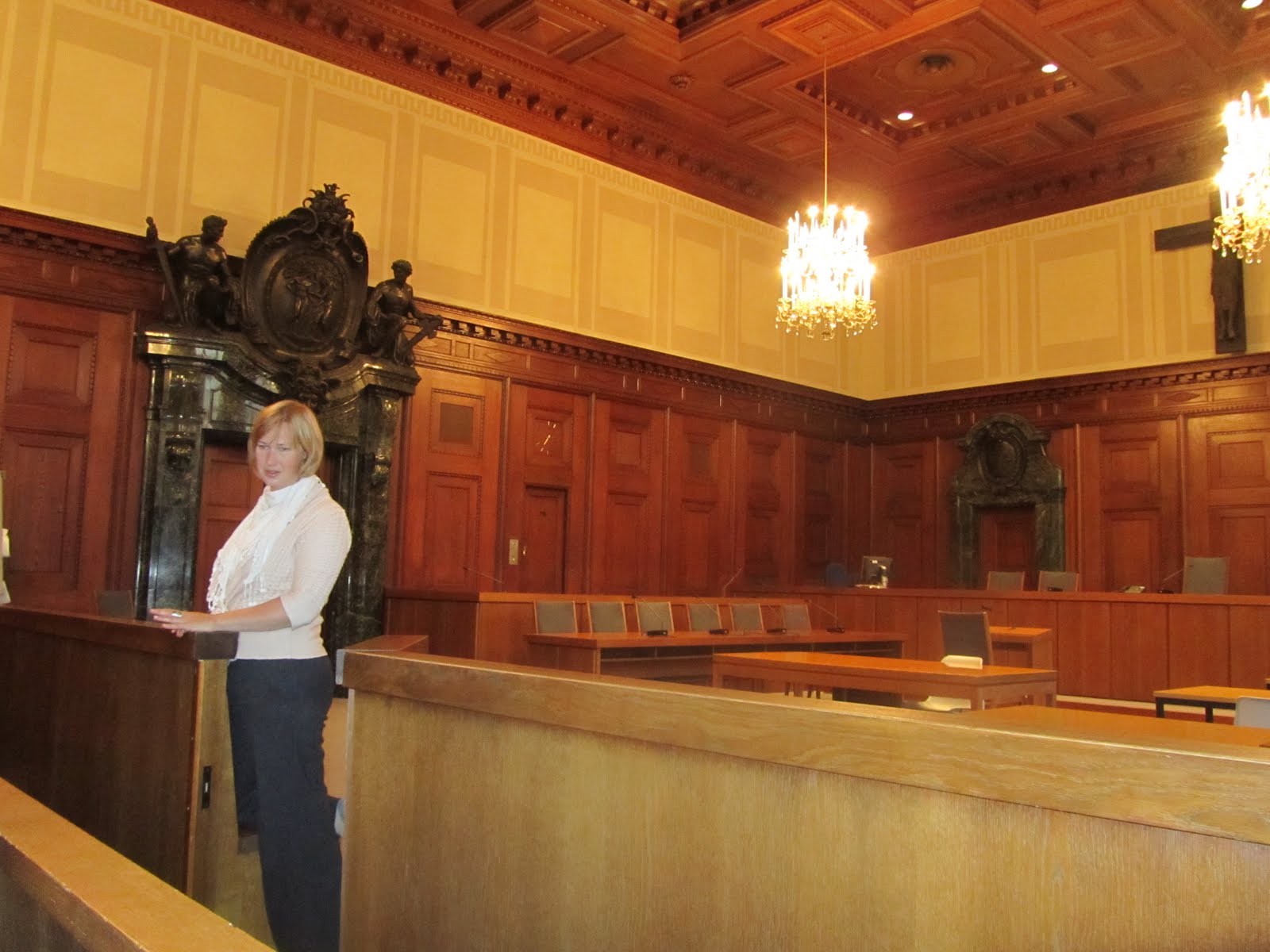
Inside Courtroom 600 where Nazi's leadership was tried


By NZAU MUSAU

That four great nations , flushed with victory and stung with injury stay the hand of vengeance and voluntarily submit their captive enemies to the judgment of the law is one of the most significant tributes that power has ever paid to reason. US chief Prosecutor at Nuremberg Robert H. Jackson.

THE flapping flags of these victorious nations still fly outside the Nuremberg Palace of Justice 66 years after they capitulated Germany, overthrew the Nazi's and committed their defiant leaders to a historic trial. Two statues of human figures looking to the opposites stand over and above the entrance to this expansive building. One of them - seemingly a woman - is looking up holding onto her shoulders and has a dove perched on her right hand. The other - most likely a man - is looking down holding on to his own chains.

You are entering Courtroom 600 where for the first time in the history of modern civilisations, high status men were hauled before the world to answer to charges of grave crimes committed against fellow human beings. Jackson, the former US Attorney General and associate justice of US Supreme Court before he was appointed US chief prosecutor at the trial, could not have been more right on the effect of the trial which took place inside these doors.

Yet, the philosophy behind committing the Nazi leaders to international trial right in their own yard instead of hanging them on capture has never been fully appreciated for years until recently with the formation of International Criminal Court. Whether the trial was fair or not is a debate for another day. For now, however, it is fact that the very idea of constituting an international trial, as Jackson said, remains undoubtedly one of the most significant tributes that power has ever paid to reason.

Besides the ICC, the “Memorium Nuremberg Trials” exhibition which opened in 2010, exactly 65 years after Courtroom 600 opened its doors to the Nazi leaders and collaborators, is perhaps another testimony to this underestimation of the significance of the trials. Germany society, just like the rest of the world, had over the years seen the trials and the resultant justice as victors trials and justice. In a big way, as the curator at the exhibition Henrike Zentgiar told us as she led us into Courtroom 600, this was actually true.

'In August of 1945 and a few months after the allied forces liberalised Nuremberg, the US took over this building which remained largely undamaged and refurbished it for the trial. Courtroom 600 was remodelled and American furniture and objects replaced German's,” she said. Walking into the exquisitely paneled Courtroom 600 armed with the consciousness that this is where some of the history's evil men - men who plotted and executed gross evil using the state - were stood to account for their deeds conjures up very sad feelings.

The courtroom is largely as it was during the period of trial with very little adjustments effected in 1961 when it was handed back to Germans and the Bavarian judiciary took the initiative to remove all American alterations. “The defense stack has however remained as it was in 1945,” Zentgiar says while pointing to the defence side where lawyers of the suspects sat.

Behind them sat top Nazi leadership of Herman Goring, Rudolf Heb, Joachim von Ribbetrop, Wilhem Keietel, Ernst kaltenbrunner, Alfred Rosenberg, Hans Frank, Wilhem Frick, Julius Streicher, Wather Funk, Hjalmar Schacht, Karl Donitz, Erich Raeder, Baldur von Schirach and Fritz Sauckel.

Others were Alfred Jodl, Franz von Papen, Arthur Seb-Inquart, Albert Speer, Kostantin von Neurath and Hans Fritzsche. Others who never made it to the courtroom but were nevertheless indicted included Robert Ley (committed suicide before trial), Gustav Krupp von Bohlen (due to ill health) and Martin Bormann (who was missing).

Behind them is the panelled wall and a door through which they entered the courtroom from an adjacent prison. Above the door is a decorative sculpture depicting two men holding daggers and posing vengeance. The only symbol of hope and redemption for the Nazi leaders here is a crucifix which, however, as the curator tells us, is a latest addition. It poignantly hangs over the front wall and above the bench were the judges sat.

If only it hang on in there in those grueling eleven months of trial, it would have served the convicts a great deal in instilling hope for the afterlife which if Jackson's opening speech is anything to go by, was obviously beckoning. Up the court now runs the exhibition which details the road travelled from Nuremberg to the Hague where a permanent international criminal court now sits. The exhibition starts with the history of international tribunal noting that Nuremberg was not the first.

“Contrary to what people think, this was not the first time the world thought of international tribunals. Twelve people had actually been tried of world war one,”Zentgiar says as she leads us through the history of the international criminal law leading to the Rome Statute.The Nuremberg trials, as Zentgiar explains, were largely seen in Germany as “Anglo-American victors justice” and as a result there is very little research that has been done on the role of the Soviets and the defence in the delivery of the justice.

The role of media in the trials is also captured in the exhibition. German media was more or less banned although many Germany journalists who had been exiled were part of the team that covered the trials. Of the 240 slots available to the media, only seven were given to Germany-based journalists but only after thorough de-nazification. The rest of the journalists came from outside Germany although like stated above, some of them were actually Germans.

One such journalist and whose press entry to Nuremberg is displayed at the exhibition is Willy Brandt who would later become a chancellor of Germany in 1969. Brandt, originally Herbert Ernst Karl Frahm had escaped Nazi's Germany and was then a correspondent for Labour Party Press in Norway and Sweden.

The video recordings of the trial can be played at the exhibition including the final sentencing in which 10 of the suspects were sentenced to hang while seven got long terms in prison.“Their bodies were taken to Munich, burnt and ash thrown into a river. As we were to later learn as a country, the idea of throwing their ash into a river was a good idea,” Zentgiar explains while recounting a story of one of the prisoners who hanged himself in prison in 1987.

The mistake made is that the prisoner was buried in a known location and over the years, his grave has turned into a pilgrimage of sorts with neo-Nazi's coming to pay their tributes every other year.

Subsequently, other trials took place in Nuremberg to try other Nazi collaborators because as Zentgiar says “almost everybody was involved at their own levels.” The trials continued until late 1950s when Americans seeking to appease Germans away from communist influence replaced the word “punishment” with “rehabilitation.”

The exhibition has displayed time-lines of key events on development of international criminal law starting with Nuremberg trial in 1945, the definition of Nuremberg principles in 1950, International tribunal for former Yugoslavia of 1993, Rwanda tribunal of 1994 and Rome statute of 1998. “It took 40 years for Nuremberg trial to be accepted in Germany. This goes to show how painful and difficult it is for people to deal with such a past,” Zentgiar concludes while pointing to a world map conflict spots and the years the conflicts erupted.

Kenya is featured in this shameful list and the year “2010” attached to it. This is the year the ICC got involved in the post-election violence issue. According to Germany ambassador to Kenya Margit Hell-wig Boette, Kenyans can learn a lot from Nuremberg, the first lesson being that there is nothing like collective responsibility.

“Crimes are committed by individuals and not by communities. We had a long discussion on this as German people and we figured out that collective guilty is only important in prevention of crimes. The concept of collective responsibility does not however exists in law,” Hellwig-Boette says. She said Germans saw individuals hurled before Nuremberg for their involvement in horrendous crimes and this was and still is an invaluable lesson that can be exported to Kenya: “When I look at the ICC involvement in Kenya, I see the same thing. These are individuals, not communities.”

Jackson the US prosecutor had restated this in his closing remarks in explaining the philosophy behind the trial as a “great effort to make peace more secure” and constituting a “juridical action of a kind” to ensure that those who commit grave crimes against humanity will pay for it personally.

Rome Statute is modern history's greatest tribute to this philosophy because, to paraphrase Jackson's famous opening speech at Nuremberg, the crimes that ICC seeks to punish have been so calculated, so malignant and so devastating, that civilisation cannot tolerate their being ignored because it cannot survive their being repeated.This is why every senior Kenyan leader, business executive, youthful student and all who visit Germany must make a pilgrimage to Nuremberg's Courtroom 600 and see how far the world of international justice has come.

Wednesday, October 19, 2011

Former Nazi Congress Hall; the shame of Adolf Hitler's Germany explored


By NZAU MUSAU

The purpose of Nazi architecture and technology should be to create ruins that would last a thousand years and thereby overcome the transience of the market - Adolf Hitler


TOWERING, forbidding and quaint are perhaps the best adjectives to describe the oval shell of the unfinished 1930’s former Nazi Congress Hall which still stands at Nuremberg city in Germany.

Behind this sensory description however is an underlying significance of the building’s sordid testimony to the megalomania of the National Socialist regime which ruled Germany from 1933 to 1945 when it was routed during the 2nd World War.
The enormity and roughness of this 1935 monumental edifice is not appreciated from outside where a facade of granite panels conceals the clinker which makes the most of the building.

Not until one goes through the entrance to “Fascination and Terror”exhibition on one of the two head-buildings closing the U shaped hall and walks up through to a suspended platform at the very end that one gets a dramatic view.
Perhaps this is why our guide Vanessa Lattich of International Nuremberg Principles Academy founding office ensured that this would be our last stop of the exhibition before a scheduled lecture upstairs by historian Eckart Dietzfelbinger. “As you can see, it was never finished and it now stands as the largest remaining monumental Nazi building in Germany. It was modelled along the fashion of ancient Coliseum of Rome and was meant to host a maximum of 50,000 people,” Lattich told us from the platform.

Designs of the edifice now stored at the centre shows that a vast roof with no underpinning was to stretch over the interior of the court. The hall was to reach a height of 70 metres and a diameter of 250 metres. It only reached 39 metres.

And yet this congress, as Lattich told us, was just one of the ten such public structures straddling an 11 square kilometres area dubbed Nazi Party Rally Grounds commissioned by the self-appointed “Supreme Master Builder” of Germany himself, Adolf Hitler.
These, besides the congress hall, were the 150,000 people capacity Lutpold Arena, the 100,000 capacity Zeppelin Field, the municipal stadium (now easyCredit stadion), the 2 km long and 60 metres wide Great Road and the 400,000 capacity Germany stadium which never took off.
It also included the March Field complex where 11 of planned 24 towers had been erected, SS barracks, KdF town of folklore and funfair and the infamous Camp Zone which started off as housing camp for rally organizers but became a prison for prisoners of war from 1939.

“This is where the Nazi movement celebrated itself in an almost obscene fashion, presenting an appealing but false picture of their regime to the world. As they openly geared people to war, they sowed the seed that would yield a hideous harvest in the above-named sites,” Nuremberg Museums writes of the Nazi Party Rally Grounds complex.

The area has since been reduced to about four square kilometres with majority of them destroyed during the second world war by the allied powers (US, UK, France, Russia and China).

Information available at the Documentation Centre now open to the public shows that the buildings were fashioned to project Hitler’s socialist power both to the world and to the Germans. The gigantic dimensions of the structures were meant to both impress and intimidate a rally attendant. “Every year and for one week during the third riech (Hitler’s state), more than 500,000 participants attended these rallies which the Fuhrer (Hitler) himself opened and addressed,” Lattich told us. Hitler had in 1933 upon coming to power declared Nuremberg the “city of the Nazi Party Rallies.”

Nuremberg was the city of traditions in Germany boasting a rich imperial history, splendid scenery, enough space and good infrastructure. The super fast and well-connected rail system in the city is as good now as it was in Fuhrer’s reign.

Moreover, the Nazi’s were well established in this part of Germany with a strong regional leader in Julius Streitcher, also the publisher of Der Sturmer newspaper famed for its strong anti-semitic stance and who would later be hanged after the Nuremberg trials of 1945/46.
The exhibition “fascination and terror” which is located in the north wing of the Congress Hall tells it all; the causes, the context and consequences of the national socialist reign of terror; all in sequential manner.

At the first stop on the rise of the NSDAP, a huge picture which bespeaks of fanatical support for the party welcomes you. Together with a larger one juxtaposed with it of military men loading canons with volleys, they sound the drum beats of war.

The next stop is “seizing of power” where all aspects of Hitler’s attempted coup together with the photos are displayed. Among them is a photo showing Hitler and his co-conspirators storming Berlin on the night of the ill-fated coup in 1923 during which a number of Nazis were killed and Hitler arrested.

Hitler used his trial and subsequent imprisonment to his own advantage. Because every word he said was reported in the media, he used this opportunity to raise the prominence of Nazism and spread its ideals. Although sentenced five years, he ended up serving less than a year.
Whiling his time in prison, Hitler wrote Mein Kampf, the anti-semitic book which also outlined his political theory embedded in hatred for communism and Judaism and rooted in his desire to conquer more land for Germany.

The third stop at the exhibition is “the beginnings of dictatorship” which details Hitler’s early days in power which started with the famous “Reich stag fire” which burned down German parliament in Berlin on February 1933 and a few weeks after Hitler had been sworn in as a chancellor. “The arson attack was used to mount a major crackdown on opponents of Hitler and essentially the installation of a totalitarian regime led by Hitler,” Lattich said. Some historians have considered the arson a Nazi sanctioned operation.

Thereafter followed deliberate moves to persecute Jews whom the system blamed for everything starting with boycott of Jewish businesses and culminating in the “Nuremberg Racial Laws” of 1935 which formally reduced the Jews to second class citizens.
The next two stops at the exhibitions are dedicated to the two myths of the time and which Hitler’s propped and his propaganda machinery advanced; the Fuhrer myth and the Volksgmeinschaft (social solidarity) myth.

The various aspects of idolization of Hitler are displayed here from adulatory head-figures of his likeness, triumphal pictures and self-embossed medals which were hung all over. A series of pictures that struck me is one that captured Hitler arriving in Nuremberg for the Nazi rallies taking from both the skyline and another on the ground.

Going side by side this adulation of Hitler as savior and super-human was the elevation of the German race and its separation from other lesser races, especially the Jews.

Yet other sections deal with the building of the Nazi Party Rallies by war prisoners, rituals conducted at the rallies, organization of the rallies, racism and antisemitism, path to war, war of annihilation against the Soviet Union, Germany resistance and finally and most inevitably, the Nuremberg trials.

The most moving aspect for me at the exhibition was the ascending/descending walkway exhibition of little paper cuttings bearing names of holocaust victims ranked according to the concentration camps where the met their fate.

Coming down from the suspended platform atop the building and looking at the victims’ names enclosed in glass lit up by parallel running streams of light, one feels like he’s descending down to hell. This is the purest testimony to the wickedness of man.
Auschwitz, Belzec, Chelmno, Majdanek, Sobibor and Treblinka- coming down in that order, read like hell-stations with all the background information I had on them in mind.“It can repeat itself in any place even now, if structures within a state are not controlled properly by those entities which are supposed to play that role in a democracy or any other system,” Dietzfelbinger told us with benefit of history on its side.

By the time we were done with the tour and the lectures, all of us were tired having flown from Netherlands via Hamburg and to Nuremberg earlier in the day but there was no way I was going to leave the centre. I slipped away into the dimly lit halls alone and engrossed myself into watching Nazi rally videos and speeches of the Fuhrer.

I was studying the Nazi rally grounds design maps when the bell for closing up the exhibition rang and I realized I was all alone. It took me quite a while to find the exit route and when I did, I found my grumpy colleagues waiting downstairs.
As we walked out of the centre, I recalled ethnic profiling happening in our country and the lamentations of Jesus in Luke 19: 41-43 came to mind. “And when he was come near, he beheld the city, and wept over it saying, If thou hadst known, even thou, at least in this thy day, the things which belong unto thy peace! but now they are hid from thine eyes.”

I wished, if only our leadership and all those who significantly shape the course of our country’s history would visit the ‘Fascination and Terror’ exhibition and know of the things that cause strife and war.

Tuesday, May 24, 2011

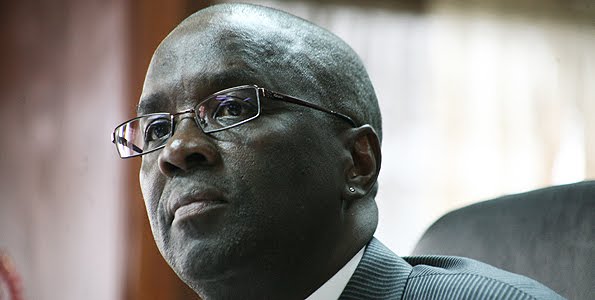
Mutunga should keep his stud even if it means losing the CJ job


By NZAU MUSAU

I have two ancestors; a man and a woman. They both had earrings and in 2003 as I prayed to them they instructed me to wear one so that they can protect me, Dr. Willy Mutunga.

IN his book Bantu Philosophy which is credited with triggering the debate on the nature of African philosophy, Belgian Catholic priest Placide Tempels made a very interesting observation about Africans.
While ministering among the Luba people of Congo DRC, Tempels noticed that even the most accomplished of African Christian converts retreated to their traditions whenever overtaken by moral lassitude, dangers or suffering.
They did so in spite of the great promise Christianity offered them leading Tempels to seek the basis upon which they did this.
Tempels arrived at the conclusion that the Luba people reverted to their traditional way of life “because their forefathers and ancestors had left them with practical solutions of the great problems of humanity; the problem of life and death, of salvation or destruction.”
“Behavior can neither be universal or permanent unless it is based upon a concatenation of ideas, a logical system of thought, a complete positive philosophy of the universe, of man and of things which surround him, of existence, of life, death and life beyond,” Tempels wrote.
This philosophy of Africans, Tempels found, lay in the bodywork of beliefs and customs held fundamentally dear to not just Lubanms but all Africans- so much so that even a fully westernized and learned person like Dr. Willy Mutunga would relate with his ancestors and make no apology of it.
Upon further examination, Tempels found out that the African behavior and practices centred on the single value of vital force and the relation with forces starting with the highest, God. The forces descend in hierarchical structure from God, to ancestors, to living beings, to animals, to plants and to the inorganic matter.
To an African mind, these forces are interdependent, reinforcing and corresponding in reverence. Ancestors are very important to Africans because according to our philosophy, they can strengthen or enfeeble us. And so are animals, plants and fellow beings.
The most important part of this philosophy is its place in developing the moral and legal rules we so hold dear as well as an objective jurisprudence. Using the relation of the hierarchical forces, what is “good” and “right” is clearly set apart and corresponding consequences apparent.
Any African who comprehends this can only do what is good. True knowledge or wisdom in this context is therefore the knowledge and appreciation of the various forces, their hierarchical ordering, interaction and resultant effects.
In African thought, Dr. Mutunga must necessarily be a wise man because he appears to appreciate the forces and more particularly the place of ancestors in his life, his western education and conditioning notwithstanding.
In endorsing him, Prof. Yash Ghai had this to say: “He has a particular commitment to developing modes of analysis which are deeply rooted in African realities. He has humanistic politics and social justice but without rancor and with modesty.”
Many other people attest to his impeccable values which I here submit is embedded in African philosophy and only polished by his Western intellectual conditioning. If it is honesty, Dr. Mutunga is honest because it is in his best interests and the interests of other “forces” around him to be honest.
It is not to please some cultural apostates- as Okot p’Bitek called them- like William Ruto, who play culturally convenient when it suits them. One time they are seated on three-legged stools being “blessed” by elders and another time they are ridiculing African “spirits” in Christian crusades.
And if Dr. Mutunga is wrong to relate with spirits of his dead ancestors, why is Ruto and other Christians right to relate with spirits of Jesus of Nazareth who died more than 2000 years ago in Calvary?
But Mutunga is not about to budge. He is ready to honor his ancestors with the ear stud and lose the CJ- which is an offer for service anyway. This is because he knows where proper value lies between cowing to cultural apostates and honoring his ancestors. He is wise!
But ancestor’s honor aside, Dr. Mutunga’s ear stud is even more important for another reason. In an era of seemingly still-born African renaissance, culturally-blended minds assuming leadership roles is very crucial.
Like argued before, most Africans still hold certain values very dear in spite of Western influence. These are the very people African leaders- political, spiritual or otherwise are supposed to lead. The success of their leadership is much dependent on how they appreciate their ways and relate to them.
This is on top of the reality of a modern nation-state modeled in Western form. Dr. Mutunga is therefore fine, unapologetic blend and antithesis for apostates who seek to lose us in the ensuing confusion of our own identities.
If it eventually boils down to between choosing between the CJ job and keeping his earring, Mutunga should choose the latter else he will be punished severely by the very ancestors who bid him spot it.

Monday, May 23, 2011

Our journey to meet the "great leader" of the great Jahmahiriya


By NZAU MUSAU

Muammar al-Gaddafi is notoriously mercurial. He often avoids making eye contact during the initial portion of meetings, and there may be long, uncomfortable periods of silence. Alternatively, he can be an engaging and charming interlocutor. Wikileaks

OUR eventful journey to meet the self styled intellectual and philosopher- Muammar Gaddafi begun on June 21st, 2007 at Jommo Kenyatta International Airport.
Nosy intelligence officials snooped about us- a group of twelve Kenyans drawn from diverse backgrounds who had been invited by the Libyan government to rally support for the “Brother Leader’s” idea of United States of Africa.
In the delegation was myself, then a journalist based in Mombasa, the venerable Maendeleo Ya Wanawake chair Rukia Subbow, then Law Society of Kenya chair Okongo Omogeni, scholar Dr. Israel Kodiaga, then North Mugirango/Borabu MP Godfrey Masanya, former Kasipul Kabondo MP Tom Obondo and former university student leader G.M Ichenga.
Also in the team was civil society personalities Ken Njiru, Awuor Odhiambo, Collins Ogutu and upcoming artiste John Akwa. The unnecessarily lengthy flight to Tripoli through Doha Qatar would have been boring were I not seated next to the inimitable Dr. Kodiaga, a man who had seen the inside of our jails severally for among other things, perceived association with Libyans.
From up there thousands of feet, confessions streamed on Libyans role in the 82 coup and at times, what I considered “elevated discussion” ensued on early science in Egypt’s Valley of Kings and generally Egyptology.
Our arrival at Tripoli International Airport the following day was a story in itself and a pointer to the rest of our encounters in Libya. Unlike other airports, I was told, Libyan authorities had no business being courteous.
And even if they wanted to, they could not relate with us well because they all spoke in Arabic and had no translators. As the bureaucratic red-tape rolled, we took comfort in the characteristic Kenyan political discussion.
Rather than deal with our passports, the Libyans took custody of half of them, including mine, and told us to venture. We were picked in state-of-the-art buses and driven into the heart of the city through smooth roads dotted at every junction with unmistakable huge portraits of the “the leader.”
That year, Gaddafi was celebrating his 37th year at the helm. Serious attempts had been made to green the lawns besides the main road leading to Tripoli airport and much of the city was littered with these portraits including the entrances of all state-run hotels.
“Prepare to be slow, forget about schedules and time. This is Libya, the Colonels territory and here, the elements of unpredictability and surprise are highly valued,” Kodiaga announced from the back of the bus as we were shuffled from one hotel to another.
We were eventually booked at Bab Al-Jadeed hotel but the Libyans wouldn’t allow us to even freshen up after a night-long flight. Amid difficulties in translation- since no one including our guide a Mr. Ali knew English, we were meant to understand we had ton go meet the leader.
Again, the drama continued. In Libya and especially when the Leader is involved, meeting venues are never known but to a few of his inner sanctum. No one, including our guide had an idea where we were headed.
Amid our grumbling, especially from our more conservative and elderly part of the delegation- Hon. Masanya and Hon. Obondo, were driven around in circles. I particularly sympathized with the two because they wielded with them some status which the Libyans didn’t seem to recognize or care.
We surfaced at a seemingly unlikely venue, sort of a town hall where many other such delegations from all African countries turned up bus by bus, and led into the meeting hall where all were frisked of any recording materials.
They took away all cameras, phones, notebooks and pens. I sneaked in my notebook and pen and would later turn out the odd one out writing while the leader talked to us. They said something to the effect that the leader’s meetings are never recorded, there are no rapporteurs, no programme… nothing!
Gaddafi himself pulled by in a bus accompanied by his bevy of female bodyguards and dressed in a light-green flowing shirt emblazoned with dark map of Africa with the Libyan territory beaming in green. He slipped in unnoticed and entered the venue through the back-door.
In his presence, his sycophants took over the show likening the man to Kwame Nkrumah, the pioneer Pan Africanist and branding him the messiah who had come to liberate the continent from the hopelessness of division. One Senegalese minister even labeled him “the quintessence of African guide.”
The leader himself appeared impressed by these little vanities and exuding a heavy show of self importance smiled brightly in acknowledgment, sometimes mildly clapping at his own psalms.
All this served to prepare us for the long harangue that the leader gave in a speech spanning one and half hours on the theme of African unity and which left me musing over his energy and philosophy on African unity.
Terming our meeting a “popular gathering,” he begun by explaining that he had invited us to stoke unity fires in our capitals ahead of the then oncoming Accra AU summit where the idea of immediate unity was going to be thrashed out once and for all.
“Those who believe in unity believe in something after reality. This belief is powerful. Those who disbelieve accept the circumstances,” he said while chest-thumping that “we will confront them with such popular conferences as this.”
He also spoke of the need to take away the debate of African unity from the “tens of the presidents” in halls to the “millions of people” in the streets. He dismissed the idea of an African Commission saying its both unpopular and powerless.
He described as “short-sighted, hired and envious” the African presidents who were delaying unity: “You should know them; they are not responsible and we are therefore entitled to uncover their plans for Accra.”
His speech was constantly interrupted by supporters who rose up chanted up his own psalms as he grinned from the podium and let them have their way. At first instance, I had thought it was a heckler but after patterns developed and drew closer to me, it sunk home.
The strongman signed out with what he probably considered would be our clarion call: “From here, we say to all people of Africa including its leaders; we want unity!”
The “quintessential African guide” slipped back through the same door he had used and the conference was as good as closed in his absence. As we tried to make way through the confusion, we spotted a flapping pennant of the Kenyan flag and sprinted after it like babes.
Tired, worn out, hungry and disenfranchised, we needed encouragement and the Libyans were not offering any. We were missing our country systems and ways. That moment, that minute I came to appreciate of the importance of pride in ones nation.
Ambassador Eliphaz Ngare is as warm as they come; true diplomats. He received us like lost brothers- embracing us warmly and explaining all the “discrepancies” we had noted in a very courteous and diplomatic way.
“I am sorry but this is how they do it here,” he politely summed it up before promising to give us the “Kenyan feel” if we honored the invitation to visit the “Kenyan House”, the official embassy residence the following day.
We were ferried back to the hotel where we lounged the entire afternoon away chit-chatting and catching up. Strange enough, the hotel staff did not bother to hide the fact that they had no incentive to be nice to any one.
They needed not be nice since Libya had for a very longtime been considered a pariah state and there were not many visitors in the country until recently. Their lack of hospitality was perhaps exhibited best by a waiter who threateningly brandished a fork to one of us after he persistently requested for salt.
The following day was to be the last day of the conference which very few took part in. While the rest of delegation left for the venue, I was enjoined in another African delegation with no clear indication of where we were being taken.
After being driven around the town, we ventured into the outskirts of the city and were driven into a government establishment where we found a battery of waiting journalists. The Libyan officials had noticed from passport that I was a journalist.
It later turned out that the venue was a negotiation base for then ongoing Western Darfur-Chad peace talks where a truce was being signed between the sides. Later that afternoon, our delegation was made to understand that a meeting had been arranged with the leader.
Anticipating the meeting, the delegation composed itself and those who had brisk sharp suits like Tom Obondo donned them, Tripoli heat notwithstanding. It later turned out that we were duped and that the meeting was of some secret movement that advances Gaddafi’s cause across Africa.
Through out the meeting, they sang praises on the Leader and chided the West over the deliberate infection of Libyan children with HIV/Aids painting so grim a picture of the situation that one was easily swallowed into the cause.
They wanted satellite branches of this network in all the capitals but we were too disappointed to give it a thought. We returned back to our hotel downcast, joking about it and contemplating making an official complaint with the embassy the following day.
On our final day in Tripoli on June 22nd, we held a meeting at Bab Al Bahr hotel where the possibility of an official complaint at our being spurned thus was discussed. Obondo put up a very good and reasonable argument on why we should simply swallow it all and move on.
Later on we drove to the embassy where we drowned all our sorrows at being warmly received by Eliphaz’s charming wife, Mr. Ashioya the head of the chancery, Mr. Mwangi the accountant and the secretary a Ms. Jane.
Behind the walls of the Kenyan house, we discussed our sorrows, sang and danced. Later on, the ambassador himself drove all of us back to Tripoli where the last act of the drama awaited us. The half of us whose passports were left at the airport were temporarily detained.
The rest of our group had proceeded to board the Qatar plane to Doha hoping our detention was a procedural matter. No explanation was made to us and our persistent asking for what was wrong only served to anger the airport officials.
Noting the huge time lapse since our colleagues left and minding our flight schedule, we resigned to our fate and relaxed. That was before one official hurriedly took us through to the flight’s entrance where after a brief altercation with the officials manning it, we were let in.
Inside the airbus, hundreds of eyes scorned at us. We had delayed the flight! But it was not over yet; just when we had settled down at our respective seats, an announcement streamed through to the effect that the six who had just entered were wanted outside.
There was no way we were going to get out again and my seat mate mama Rukia made that clear to me. We held our ground and as a result, two armed Arab men spotting dark sunglasses stormed the plane and demanded we get out.
In her ingenuity, mama Rukia grabbed hold of my passport and sat on it just when one of the men was closing in on me. The other five pulled more or less similar acts and unable to locate the late entrants, the two men slipped out of the flight before it took off.
With the flight airborne, I sighed relief especially after being told of a story of another Kenyan held at the airport for a month after being forced to miss his flight in circumstances more or less similar to ours.
Up to this day, we have never known what the problem was with our passports. It may as well be that three years later, we are still wanted in Libya!

Wednesday, May 11, 2011

My journey to the Hague

By NZAU MUSAU


The first appearance: Thursday April 7, 2011

The city cast her people out on her, and Antony, enthroned in the market place, did sit alone, whistling to the air, which but for vacancy, had gone to gaze Cleopatra too, and made a gap in nature - William Shakespeare (Antony & Cleopatra)

ON a cold morning of April 7, a bus pulled outside the main entrance of the International Criminal Court along Maanweg Road at The Hague in The Netherlands and from it disembarked group of MPs and relatives of the Ocampo Six.

The previous day, the group had been doing reconnaissance rounds in the court vicinity, a number posing for pictures at the front of the court which has sent shivers across African corridors of power.

After disembarking, they walked around the building to the court room entrance, clearing the front for the historic appearance of the first three suspects of Prosecutor Louis Moreno Ocampo in the December 2007-08 post-election violence case - William Ruto, Henry Kosgey and Joshua arap Sang.

At around 9:00am, the three pulled close by each other and the hour begun right then. Unlike all others, they were ushered in through the main entrance of the court by court officials. I dashed to the other side of the court along Regulusweg Road only to find the group of MPs milling around and waiting to get in.

They were speaking in hushed tones and bracing themselves for the appearance. I shoved past them using my media accreditation badge and positioned myself at the far end of the corridor leading towards the court reception.

Although the place is a no-photo zone, I saw a man taking video shots of the trooping MPs and immediately I went to claim my right to do the same. The receptionist whom I had acquainted myself with the previous day told me that because of the nature of the occasion, they would allow it.

I swung to action positioning myself at a vantage position where I snapped them as they trooped and lingered around awaiting instructions on where the galleries were and how to lock up their heavy wear.

Attorney General Amos Wako, Director of Public Prosecution Keriako Tobiko and Solicitor General Wanjuki Muchemi were part of this group headed for the public gallery. My journalistic instinct told me this would be a worthy photo - to capture the three important criminal justice officers in Kenya reduced to bystanders in a far away court.

Miguna Miguna, the PS Coalition Affairs and advisor to the PM, stood out in his towering frame and Muslim cap. As he strode through the corridor, the rest of the Kenyan delegation watched in disbelief that he had made true his pledge to attend “the mother of all funerals” as he wrote in the Star earlier on.

Only Chepalungu MP Isaac Ruto was bold enough to shake his hand and ask him: “kwani hata wewe umekuja hapa?” I snapped my camera just at the moment Ruto shouted at me: “Huyu ni mtu mbaya sana.”

Shortly after they disengaged, Miguna, whom I had gone to interview at his small hotel room the previous day, whispered to me: “He is not genuine; you know it’s good for him,” intimating the photo was a PR stunt to the benefit of Ruto.

The delegation were strewn of all their attachments including the matching caps and their jackets which were all locked up before taking the stairs up the public galleries. Majority of them filled up the Public Gallery I. I was at the Public Gallery II.

Inside the sliding gallery, I took my position at my reserved seat in the second row and behind K24’s Jeff Koinange who sat at the far left first row. In front of us were two flat screens - one on the left and the other on the right - announcing: Kenyan case; ICC-01/09-01/11: First Appearance.

A glass wall separating us and the court was still blinded by 9:28am. Before it could open, Cabinet minister Njeru Githae accompanied by an aide came and sat behind me on my left. He didn’t fix his translation headphones, the aide did it.

At exactly 9:30am, the curtain was drawn and the reality of the appearance started to sink in. The court was well lit, well ordered and everyone but the judges had taken their position. On my right, the prosecution, my left the defence and directly opposite me were the court officials. Behind them was the row for the three judges.

Two pamphlets issued to all at the reception had offered an idea of how the courtroom was arranged. All had taken their positions except that the desks allotted to the legal representatives of victims were occupied by the Registrar of the Court and a few staff. One of the pamphlets had graphics of the actual participants dressed in the court regalia apart from the suspects. It also listed their names.

From my position I could not see William Ruto. However, the well dispositioned Henry Kosgey and the diminutive Sang were in my full view as were most of the lawyers. I was still dazed by the orderliness of the court when the judges led by the presiding judge Ekaterina Trendafilova walked in and took over the show by first apologizing for a three-minute delay.

Looking it through the Kenyan lens, it sounded odd for a person to apologise for a three-minute delay. Again, the reality was sinking home that we were 4,153 miles away from home. “Mr Ruto, Mr Sang and Mr Kosgey, good morning and welcome to the chamber,” Judge Ekaterina addressed them leaving aside the characteristic pompous and honorary titles the two of the three hold.

I remember flashing back to the Waki hearings of 2007 which I covered from start to finish and how the ICC route seemed so farfetched as Justice Waki inquired of it from International Commission of Jurist’s Wilfred Nderitu.

Then began the court session with one and half minute slotted for photographers to snap their shots, a court officer introducing the case and both sides introducing themselves.

Judge Ekaterina was very meticulous and circumspect. She did not waste an opportunity to exert her control over the proceedings of the day and long before the face off with Ruto she had warned of the seriousness of the court.

By 10:25am, the session was done and the judges first walked out before the curtains were once again drawn on us and we left the gallery. Outside the court, the MPs went for Ruto and ignored Kosgey and Sang’. By that time, they had already donned their matching Kenyan caps. Nominated MP Maison Leshoomo was the most conspicuous of them in her full Samburu woman’s regalia with a headgear to boot.

They mobbed Ruto congratulating him for a sterling court performance, sang the national anthem and the country’s pro-liberation songs. Ruto then spoke of the contradiction that was for a criminal court to go for innocent people like him.

After the interviews, Ruto and his entourage crossed the road for a live interview with KTN across the road and proceeded to walk to my hotel room for another live interview with Citizen TV. They left Sang behind at the steps looking forlorn and lost.

At that moment, I reckoned of the misfortune that is to be accused alongside big shots as Ruto and Kosgey, the latter whom had sneaked quietly and respectfully accompanied by his two sons and his lawyers.

The picture of Shakespeare’s Antony; the Roman general who was left whistling alone at an Alexandrian street as all attention went to Queen Cleopatra came to mind. All had left in trail of Ruto and he was left granting interviews to obscure foreign media.

I eavesdropped into one of the interviews and the anger within him was palpable when he swore that he was only waiting on the evidence Ocampo has so that he can, in his own words, “tear it apart.”

I crossed Miguna granting an interview where he relished the moment when Ruto was told to sit down. Shortly after the politicians had dissipated from the court vicinity, Ocampo called a press conference and dissociated himself from Kenyan politics.


Second appearance: Friday, April 8, 2011

Unlike the first day, the first appearance of suspects Uhuru Kenyatta, Francis Muthaura and Hussein Ali was scheduled for the afternoon, 2:30pm Hague time.

Journalists had enough time to prepare ourselves in the morning and ease ourselves off the previous day’s pressures. We spent considerable amount of time at the court’s media centre filing advance stories.

Although Ali had arrived at The Hague on Sunday and earlier than Uhuru, none of us had seen him. We were assuring ourselves that he would be showing up at the court’s main entrance in not so long and we would snap the shots we had missed at the airport and the hotel.

Little did we know that the wily Major General was determined to play smart to the very end. He pulled outside the court’s entrance earlier than we had anticipated and as a result we missed the moment.

I was the most unlucky of my pack that day because I missed the arrival of the other two as well as I shuttled from the media centre to the main entrance back and forth. Satisfied they had all stepped in, we concentrated on the courtroom entrance where the MPs milled around.

The Kenyatta’s were the most distinguishable in their somberness. Looking at Uhuru’s wife Margaret, cousin Beth Mugo, sister Kristina Pratt and his uncle George Muhoho converse in hushed tones, you could tell the matter at hand was heavy.

William Ruto was engaged in a deep conversation with AG Amos Wako. Unknown to them, they stood right in the cyclist path running across the court’s perimeter fence. We continued snapping the photos until one mindless young cyclist rode straight into their way. The boy missed them by a whisker and left everyone - including the two heavyweights holding their breaths. Even a pro-suspects protester who held placards supporting the six was taken aback.

I spotted Lands assistant minister Wakoli Bifwoli leaning against a wall seemingly lost in his own thought. Besides him was Mary Wambui’s daughter Winnie Mwai who spotted very cool cornrows.

Near them lingered the silver haired presidential advisor on coalition, constitutional and youth affairs Prof Kivutha Kibwana who for the most part I ever saw him, talked to no one. I only caught him once speaking to Ruto’s lawyer Kioko Kilukumi outside the court.

Tired of waiting for the opportunity to get it, Joshua arap Sang sat down in the middle of Regulusweg road adjacent to the court. Assistant agriculture minister Kareke Mbiuki spotted all the caps meant for the MPs as MP Johnstone Muthama extended his parliamentary chief whip duties to the court.

The Kangundo MP read the names of the MPs one by one as they stepped in. Once inside the court, they made their way to their respective gallery. I crossed Winnie Mwai looking for the galleries and guided her. I also crossed Ocampo in one of the corridors munching a sandwich.

Inside the gallery two, I took a position next to Jeff Koinange and between Nation’s Eric Shimoli, this time in the first row. This meant I would be able to see all in the court without having to struggle.

When the blinds were drawn and both sides - public and court - became visible, I saw Uhuru grinning and acknowledging gestures from members of the public in the gallery. He actually acknowledged Jeff’s presence by smiling reassuringly at him.

According to ICC Rules of Decorum, Rule 6, visitors are not permitted to point or gesture at anyone seated in the court room. All the three were sandwiched between their team of lawyers. Lawyer Evans Monari took along with him the latest technological gadget- an iPad - into the courtroom so that while the rest clicked their mouse, he was simply scrolling with his index finger.

In this session, Maj Gen Ali sunk home the reality of the appearance. Only three years ago during the Waki hearings he repeated severally to the disbelief of everyone that he had no regrets whatsoever in the way he had handled the post-election violence.

If anything, Ali had insisted at Waki’s hearing that he would do exactly what he did in 2008 if he was offered a repeat of the circumstances. But now he was hauled in a “foreign” court miles away from home with the no nonsense judge asking him to speak louder.

As for Muthaura, the reading of his charges was perhaps the saddest. The career civil servant swallowed a gulp of saliva, drew himself back and leaning on his chair tapped the table as the charges of murder, rape, persecution and other inhumane acts were read out.

The court clerk reading the charges did not help matters by glancing over at the suspects as he read the charges. It was almost unimaginable to have the head of the Civil Service in court let alone to answer to issues of rape and murder in Kenya.

The session went on and by 3:25pm, it was over and we made our way out. The previous day’s happenings repeated themselves with Uhuru being received jubilantly by the MPs and other Kenyans. Very little or no attention was given to Muthaura and Ali who immediately vanished from the place.

Mbiuki stole the thunder off Uhuru's wife when after emerging from the court's exit gate, he went for him first pumping a powerful congratulatory handshake before giving Uhuru's wife her chance to hug her beloved.

Like Ruto before him, Kenyatta led all MPs in a single file down the lanes leading to Movenpick Hotel for a celebratory lunch. Muthama and MP Jamleck Kamau pumped similarly powerful handshakes and tapped him in the back for informing the court that President Kibaki is the “duly elected President” of Kenya. Miguna and Salim Lone, looking lonely, trailed them on their way to a nearby train station.