Tuesday, May 24, 2011

Mutunga should keep his stud even if it means losing the CJ job


By NZAU MUSAU

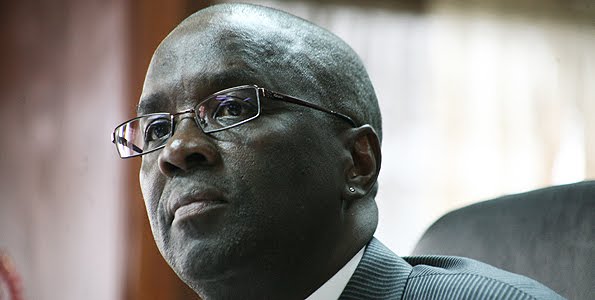
I have two ancestors; a man and a woman. They both had earrings and in 2003 as I prayed to them they instructed me to wear one so that they can protect me, Dr. Willy Mutunga.

IN his book Bantu Philosophy which is credited with triggering the debate on the nature of African philosophy, Belgian Catholic priest Placide Tempels made a very interesting observation about Africans.
While ministering among the Luba people of Congo DRC, Tempels noticed that even the most accomplished of African Christian converts retreated to their traditions whenever overtaken by moral lassitude, dangers or suffering.
They did so in spite of the great promise Christianity offered them leading Tempels to seek the basis upon which they did this.
Tempels arrived at the conclusion that the Luba people reverted to their traditional way of life “because their forefathers and ancestors had left them with practical solutions of the great problems of humanity; the problem of life and death, of salvation or destruction.”
“Behavior can neither be universal or permanent unless it is based upon a concatenation of ideas, a logical system of thought, a complete positive philosophy of the universe, of man and of things which surround him, of existence, of life, death and life beyond,” Tempels wrote.
This philosophy of Africans, Tempels found, lay in the bodywork of beliefs and customs held fundamentally dear to not just Lubanms but all Africans- so much so that even a fully westernized and learned person like Dr. Willy Mutunga would relate with his ancestors and make no apology of it.
Upon further examination, Tempels found out that the African behavior and practices centred on the single value of vital force and the relation with forces starting with the highest, God. The forces descend in hierarchical structure from God, to ancestors, to living beings, to animals, to plants and to the inorganic matter.
To an African mind, these forces are interdependent, reinforcing and corresponding in reverence. Ancestors are very important to Africans because according to our philosophy, they can strengthen or enfeeble us. And so are animals, plants and fellow beings.
The most important part of this philosophy is its place in developing the moral and legal rules we so hold dear as well as an objective jurisprudence. Using the relation of the hierarchical forces, what is “good” and “right” is clearly set apart and corresponding consequences apparent.
Any African who comprehends this can only do what is good. True knowledge or wisdom in this context is therefore the knowledge and appreciation of the various forces, their hierarchical ordering, interaction and resultant effects.
In African thought, Dr. Mutunga must necessarily be a wise man because he appears to appreciate the forces and more particularly the place of ancestors in his life, his western education and conditioning notwithstanding.
In endorsing him, Prof. Yash Ghai had this to say: “He has a particular commitment to developing modes of analysis which are deeply rooted in African realities. He has humanistic politics and social justice but without rancor and with modesty.”
Many other people attest to his impeccable values which I here submit is embedded in African philosophy and only polished by his Western intellectual conditioning. If it is honesty, Dr. Mutunga is honest because it is in his best interests and the interests of other “forces” around him to be honest.
It is not to please some cultural apostates- as Okot p’Bitek called them- like William Ruto, who play culturally convenient when it suits them. One time they are seated on three-legged stools being “blessed” by elders and another time they are ridiculing African “spirits” in Christian crusades.
And if Dr. Mutunga is wrong to relate with spirits of his dead ancestors, why is Ruto and other Christians right to relate with spirits of Jesus of Nazareth who died more than 2000 years ago in Calvary?
But Mutunga is not about to budge. He is ready to honor his ancestors with the ear stud and lose the CJ- which is an offer for service anyway. This is because he knows where proper value lies between cowing to cultural apostates and honoring his ancestors. He is wise!
But ancestor’s honor aside, Dr. Mutunga’s ear stud is even more important for another reason. In an era of seemingly still-born African renaissance, culturally-blended minds assuming leadership roles is very crucial.
Like argued before, most Africans still hold certain values very dear in spite of Western influence. These are the very people African leaders- political, spiritual or otherwise are supposed to lead. The success of their leadership is much dependent on how they appreciate their ways and relate to them.
This is on top of the reality of a modern nation-state modeled in Western form. Dr. Mutunga is therefore fine, unapologetic blend and antithesis for apostates who seek to lose us in the ensuing confusion of our own identities.
If it eventually boils down to between choosing between the CJ job and keeping his earring, Mutunga should choose the latter else he will be punished severely by the very ancestors who bid him spot it.

Monday, May 23, 2011

Our journey to meet the "great leader" of the great Jahmahiriya


By NZAU MUSAU

Muammar al-Gaddafi is notoriously mercurial. He often avoids making eye contact during the initial portion of meetings, and there may be long, uncomfortable periods of silence. Alternatively, he can be an engaging and charming interlocutor. Wikileaks

OUR eventful journey to meet the self styled intellectual and philosopher- Muammar Gaddafi begun on June 21st, 2007 at Jommo Kenyatta International Airport.
Nosy intelligence officials snooped about us- a group of twelve Kenyans drawn from diverse backgrounds who had been invited by the Libyan government to rally support for the “Brother Leader’s” idea of United States of Africa.
In the delegation was myself, then a journalist based in Mombasa, the venerable Maendeleo Ya Wanawake chair Rukia Subbow, then Law Society of Kenya chair Okongo Omogeni, scholar Dr. Israel Kodiaga, then North Mugirango/Borabu MP Godfrey Masanya, former Kasipul Kabondo MP Tom Obondo and former university student leader G.M Ichenga.
Also in the team was civil society personalities Ken Njiru, Awuor Odhiambo, Collins Ogutu and upcoming artiste John Akwa. The unnecessarily lengthy flight to Tripoli through Doha Qatar would have been boring were I not seated next to the inimitable Dr. Kodiaga, a man who had seen the inside of our jails severally for among other things, perceived association with Libyans.
From up there thousands of feet, confessions streamed on Libyans role in the 82 coup and at times, what I considered “elevated discussion” ensued on early science in Egypt’s Valley of Kings and generally Egyptology.
Our arrival at Tripoli International Airport the following day was a story in itself and a pointer to the rest of our encounters in Libya. Unlike other airports, I was told, Libyan authorities had no business being courteous.
And even if they wanted to, they could not relate with us well because they all spoke in Arabic and had no translators. As the bureaucratic red-tape rolled, we took comfort in the characteristic Kenyan political discussion.
Rather than deal with our passports, the Libyans took custody of half of them, including mine, and told us to venture. We were picked in state-of-the-art buses and driven into the heart of the city through smooth roads dotted at every junction with unmistakable huge portraits of the “the leader.”
That year, Gaddafi was celebrating his 37th year at the helm. Serious attempts had been made to green the lawns besides the main road leading to Tripoli airport and much of the city was littered with these portraits including the entrances of all state-run hotels.
“Prepare to be slow, forget about schedules and time. This is Libya, the Colonels territory and here, the elements of unpredictability and surprise are highly valued,” Kodiaga announced from the back of the bus as we were shuffled from one hotel to another.
We were eventually booked at Bab Al-Jadeed hotel but the Libyans wouldn’t allow us to even freshen up after a night-long flight. Amid difficulties in translation- since no one including our guide a Mr. Ali knew English, we were meant to understand we had ton go meet the leader.
Again, the drama continued. In Libya and especially when the Leader is involved, meeting venues are never known but to a few of his inner sanctum. No one, including our guide had an idea where we were headed.
Amid our grumbling, especially from our more conservative and elderly part of the delegation- Hon. Masanya and Hon. Obondo, were driven around in circles. I particularly sympathized with the two because they wielded with them some status which the Libyans didn’t seem to recognize or care.
We surfaced at a seemingly unlikely venue, sort of a town hall where many other such delegations from all African countries turned up bus by bus, and led into the meeting hall where all were frisked of any recording materials.
They took away all cameras, phones, notebooks and pens. I sneaked in my notebook and pen and would later turn out the odd one out writing while the leader talked to us. They said something to the effect that the leader’s meetings are never recorded, there are no rapporteurs, no programme… nothing!
Gaddafi himself pulled by in a bus accompanied by his bevy of female bodyguards and dressed in a light-green flowing shirt emblazoned with dark map of Africa with the Libyan territory beaming in green. He slipped in unnoticed and entered the venue through the back-door.
In his presence, his sycophants took over the show likening the man to Kwame Nkrumah, the pioneer Pan Africanist and branding him the messiah who had come to liberate the continent from the hopelessness of division. One Senegalese minister even labeled him “the quintessence of African guide.”
The leader himself appeared impressed by these little vanities and exuding a heavy show of self importance smiled brightly in acknowledgment, sometimes mildly clapping at his own psalms.
All this served to prepare us for the long harangue that the leader gave in a speech spanning one and half hours on the theme of African unity and which left me musing over his energy and philosophy on African unity.
Terming our meeting a “popular gathering,” he begun by explaining that he had invited us to stoke unity fires in our capitals ahead of the then oncoming Accra AU summit where the idea of immediate unity was going to be thrashed out once and for all.
“Those who believe in unity believe in something after reality. This belief is powerful. Those who disbelieve accept the circumstances,” he said while chest-thumping that “we will confront them with such popular conferences as this.”
He also spoke of the need to take away the debate of African unity from the “tens of the presidents” in halls to the “millions of people” in the streets. He dismissed the idea of an African Commission saying its both unpopular and powerless.
He described as “short-sighted, hired and envious” the African presidents who were delaying unity: “You should know them; they are not responsible and we are therefore entitled to uncover their plans for Accra.”
His speech was constantly interrupted by supporters who rose up chanted up his own psalms as he grinned from the podium and let them have their way. At first instance, I had thought it was a heckler but after patterns developed and drew closer to me, it sunk home.
The strongman signed out with what he probably considered would be our clarion call: “From here, we say to all people of Africa including its leaders; we want unity!”
The “quintessential African guide” slipped back through the same door he had used and the conference was as good as closed in his absence. As we tried to make way through the confusion, we spotted a flapping pennant of the Kenyan flag and sprinted after it like babes.
Tired, worn out, hungry and disenfranchised, we needed encouragement and the Libyans were not offering any. We were missing our country systems and ways. That moment, that minute I came to appreciate of the importance of pride in ones nation.
Ambassador Eliphaz Ngare is as warm as they come; true diplomats. He received us like lost brothers- embracing us warmly and explaining all the “discrepancies” we had noted in a very courteous and diplomatic way.
“I am sorry but this is how they do it here,” he politely summed it up before promising to give us the “Kenyan feel” if we honored the invitation to visit the “Kenyan House”, the official embassy residence the following day.
We were ferried back to the hotel where we lounged the entire afternoon away chit-chatting and catching up. Strange enough, the hotel staff did not bother to hide the fact that they had no incentive to be nice to any one.
They needed not be nice since Libya had for a very longtime been considered a pariah state and there were not many visitors in the country until recently. Their lack of hospitality was perhaps exhibited best by a waiter who threateningly brandished a fork to one of us after he persistently requested for salt.
The following day was to be the last day of the conference which very few took part in. While the rest of delegation left for the venue, I was enjoined in another African delegation with no clear indication of where we were being taken.
After being driven around the town, we ventured into the outskirts of the city and were driven into a government establishment where we found a battery of waiting journalists. The Libyan officials had noticed from passport that I was a journalist.
It later turned out that the venue was a negotiation base for then ongoing Western Darfur-Chad peace talks where a truce was being signed between the sides. Later that afternoon, our delegation was made to understand that a meeting had been arranged with the leader.
Anticipating the meeting, the delegation composed itself and those who had brisk sharp suits like Tom Obondo donned them, Tripoli heat notwithstanding. It later turned out that we were duped and that the meeting was of some secret movement that advances Gaddafi’s cause across Africa.
Through out the meeting, they sang praises on the Leader and chided the West over the deliberate infection of Libyan children with HIV/Aids painting so grim a picture of the situation that one was easily swallowed into the cause.
They wanted satellite branches of this network in all the capitals but we were too disappointed to give it a thought. We returned back to our hotel downcast, joking about it and contemplating making an official complaint with the embassy the following day.
On our final day in Tripoli on June 22nd, we held a meeting at Bab Al Bahr hotel where the possibility of an official complaint at our being spurned thus was discussed. Obondo put up a very good and reasonable argument on why we should simply swallow it all and move on.
Later on we drove to the embassy where we drowned all our sorrows at being warmly received by Eliphaz’s charming wife, Mr. Ashioya the head of the chancery, Mr. Mwangi the accountant and the secretary a Ms. Jane.
Behind the walls of the Kenyan house, we discussed our sorrows, sang and danced. Later on, the ambassador himself drove all of us back to Tripoli where the last act of the drama awaited us. The half of us whose passports were left at the airport were temporarily detained.
The rest of our group had proceeded to board the Qatar plane to Doha hoping our detention was a procedural matter. No explanation was made to us and our persistent asking for what was wrong only served to anger the airport officials.
Noting the huge time lapse since our colleagues left and minding our flight schedule, we resigned to our fate and relaxed. That was before one official hurriedly took us through to the flight’s entrance where after a brief altercation with the officials manning it, we were let in.
Inside the airbus, hundreds of eyes scorned at us. We had delayed the flight! But it was not over yet; just when we had settled down at our respective seats, an announcement streamed through to the effect that the six who had just entered were wanted outside.
There was no way we were going to get out again and my seat mate mama Rukia made that clear to me. We held our ground and as a result, two armed Arab men spotting dark sunglasses stormed the plane and demanded we get out.
In her ingenuity, mama Rukia grabbed hold of my passport and sat on it just when one of the men was closing in on me. The other five pulled more or less similar acts and unable to locate the late entrants, the two men slipped out of the flight before it took off.
With the flight airborne, I sighed relief especially after being told of a story of another Kenyan held at the airport for a month after being forced to miss his flight in circumstances more or less similar to ours.
Up to this day, we have never known what the problem was with our passports. It may as well be that three years later, we are still wanted in Libya!

Wednesday, May 11, 2011

My journey to the Hague

By NZAU MUSAU


The first appearance: Thursday April 7, 2011

The city cast her people out on her, and Antony, enthroned in the market place, did sit alone, whistling to the air, which but for vacancy, had gone to gaze Cleopatra too, and made a gap in nature - William Shakespeare (Antony & Cleopatra)

ON a cold morning of April 7, a bus pulled outside the main entrance of the International Criminal Court along Maanweg Road at The Hague in The Netherlands and from it disembarked group of MPs and relatives of the Ocampo Six.

The previous day, the group had been doing reconnaissance rounds in the court vicinity, a number posing for pictures at the front of the court which has sent shivers across African corridors of power.

After disembarking, they walked around the building to the court room entrance, clearing the front for the historic appearance of the first three suspects of Prosecutor Louis Moreno Ocampo in the December 2007-08 post-election violence case - William Ruto, Henry Kosgey and Joshua arap Sang.

At around 9:00am, the three pulled close by each other and the hour begun right then. Unlike all others, they were ushered in through the main entrance of the court by court officials. I dashed to the other side of the court along Regulusweg Road only to find the group of MPs milling around and waiting to get in.

They were speaking in hushed tones and bracing themselves for the appearance. I shoved past them using my media accreditation badge and positioned myself at the far end of the corridor leading towards the court reception.

Although the place is a no-photo zone, I saw a man taking video shots of the trooping MPs and immediately I went to claim my right to do the same. The receptionist whom I had acquainted myself with the previous day told me that because of the nature of the occasion, they would allow it.

I swung to action positioning myself at a vantage position where I snapped them as they trooped and lingered around awaiting instructions on where the galleries were and how to lock up their heavy wear.

Attorney General Amos Wako, Director of Public Prosecution Keriako Tobiko and Solicitor General Wanjuki Muchemi were part of this group headed for the public gallery. My journalistic instinct told me this would be a worthy photo - to capture the three important criminal justice officers in Kenya reduced to bystanders in a far away court.

Miguna Miguna, the PS Coalition Affairs and advisor to the PM, stood out in his towering frame and Muslim cap. As he strode through the corridor, the rest of the Kenyan delegation watched in disbelief that he had made true his pledge to attend “the mother of all funerals” as he wrote in the Star earlier on.

Only Chepalungu MP Isaac Ruto was bold enough to shake his hand and ask him: “kwani hata wewe umekuja hapa?” I snapped my camera just at the moment Ruto shouted at me: “Huyu ni mtu mbaya sana.”

Shortly after they disengaged, Miguna, whom I had gone to interview at his small hotel room the previous day, whispered to me: “He is not genuine; you know it’s good for him,” intimating the photo was a PR stunt to the benefit of Ruto.

The delegation were strewn of all their attachments including the matching caps and their jackets which were all locked up before taking the stairs up the public galleries. Majority of them filled up the Public Gallery I. I was at the Public Gallery II.

Inside the sliding gallery, I took my position at my reserved seat in the second row and behind K24’s Jeff Koinange who sat at the far left first row. In front of us were two flat screens - one on the left and the other on the right - announcing: Kenyan case; ICC-01/09-01/11: First Appearance.

A glass wall separating us and the court was still blinded by 9:28am. Before it could open, Cabinet minister Njeru Githae accompanied by an aide came and sat behind me on my left. He didn’t fix his translation headphones, the aide did it.

At exactly 9:30am, the curtain was drawn and the reality of the appearance started to sink in. The court was well lit, well ordered and everyone but the judges had taken their position. On my right, the prosecution, my left the defence and directly opposite me were the court officials. Behind them was the row for the three judges.

Two pamphlets issued to all at the reception had offered an idea of how the courtroom was arranged. All had taken their positions except that the desks allotted to the legal representatives of victims were occupied by the Registrar of the Court and a few staff. One of the pamphlets had graphics of the actual participants dressed in the court regalia apart from the suspects. It also listed their names.

From my position I could not see William Ruto. However, the well dispositioned Henry Kosgey and the diminutive Sang were in my full view as were most of the lawyers. I was still dazed by the orderliness of the court when the judges led by the presiding judge Ekaterina Trendafilova walked in and took over the show by first apologizing for a three-minute delay.

Looking it through the Kenyan lens, it sounded odd for a person to apologise for a three-minute delay. Again, the reality was sinking home that we were 4,153 miles away from home. “Mr Ruto, Mr Sang and Mr Kosgey, good morning and welcome to the chamber,” Judge Ekaterina addressed them leaving aside the characteristic pompous and honorary titles the two of the three hold.

I remember flashing back to the Waki hearings of 2007 which I covered from start to finish and how the ICC route seemed so farfetched as Justice Waki inquired of it from International Commission of Jurist’s Wilfred Nderitu.

Then began the court session with one and half minute slotted for photographers to snap their shots, a court officer introducing the case and both sides introducing themselves.

Judge Ekaterina was very meticulous and circumspect. She did not waste an opportunity to exert her control over the proceedings of the day and long before the face off with Ruto she had warned of the seriousness of the court.

By 10:25am, the session was done and the judges first walked out before the curtains were once again drawn on us and we left the gallery. Outside the court, the MPs went for Ruto and ignored Kosgey and Sang’. By that time, they had already donned their matching Kenyan caps. Nominated MP Maison Leshoomo was the most conspicuous of them in her full Samburu woman’s regalia with a headgear to boot.

They mobbed Ruto congratulating him for a sterling court performance, sang the national anthem and the country’s pro-liberation songs. Ruto then spoke of the contradiction that was for a criminal court to go for innocent people like him.

After the interviews, Ruto and his entourage crossed the road for a live interview with KTN across the road and proceeded to walk to my hotel room for another live interview with Citizen TV. They left Sang behind at the steps looking forlorn and lost.

At that moment, I reckoned of the misfortune that is to be accused alongside big shots as Ruto and Kosgey, the latter whom had sneaked quietly and respectfully accompanied by his two sons and his lawyers.

The picture of Shakespeare’s Antony; the Roman general who was left whistling alone at an Alexandrian street as all attention went to Queen Cleopatra came to mind. All had left in trail of Ruto and he was left granting interviews to obscure foreign media.

I eavesdropped into one of the interviews and the anger within him was palpable when he swore that he was only waiting on the evidence Ocampo has so that he can, in his own words, “tear it apart.”

I crossed Miguna granting an interview where he relished the moment when Ruto was told to sit down. Shortly after the politicians had dissipated from the court vicinity, Ocampo called a press conference and dissociated himself from Kenyan politics.


Second appearance: Friday, April 8, 2011

Unlike the first day, the first appearance of suspects Uhuru Kenyatta, Francis Muthaura and Hussein Ali was scheduled for the afternoon, 2:30pm Hague time.

Journalists had enough time to prepare ourselves in the morning and ease ourselves off the previous day’s pressures. We spent considerable amount of time at the court’s media centre filing advance stories.

Although Ali had arrived at The Hague on Sunday and earlier than Uhuru, none of us had seen him. We were assuring ourselves that he would be showing up at the court’s main entrance in not so long and we would snap the shots we had missed at the airport and the hotel.

Little did we know that the wily Major General was determined to play smart to the very end. He pulled outside the court’s entrance earlier than we had anticipated and as a result we missed the moment.

I was the most unlucky of my pack that day because I missed the arrival of the other two as well as I shuttled from the media centre to the main entrance back and forth. Satisfied they had all stepped in, we concentrated on the courtroom entrance where the MPs milled around.

The Kenyatta’s were the most distinguishable in their somberness. Looking at Uhuru’s wife Margaret, cousin Beth Mugo, sister Kristina Pratt and his uncle George Muhoho converse in hushed tones, you could tell the matter at hand was heavy.

William Ruto was engaged in a deep conversation with AG Amos Wako. Unknown to them, they stood right in the cyclist path running across the court’s perimeter fence. We continued snapping the photos until one mindless young cyclist rode straight into their way. The boy missed them by a whisker and left everyone - including the two heavyweights holding their breaths. Even a pro-suspects protester who held placards supporting the six was taken aback.

I spotted Lands assistant minister Wakoli Bifwoli leaning against a wall seemingly lost in his own thought. Besides him was Mary Wambui’s daughter Winnie Mwai who spotted very cool cornrows.

Near them lingered the silver haired presidential advisor on coalition, constitutional and youth affairs Prof Kivutha Kibwana who for the most part I ever saw him, talked to no one. I only caught him once speaking to Ruto’s lawyer Kioko Kilukumi outside the court.

Tired of waiting for the opportunity to get it, Joshua arap Sang sat down in the middle of Regulusweg road adjacent to the court. Assistant agriculture minister Kareke Mbiuki spotted all the caps meant for the MPs as MP Johnstone Muthama extended his parliamentary chief whip duties to the court.

The Kangundo MP read the names of the MPs one by one as they stepped in. Once inside the court, they made their way to their respective gallery. I crossed Winnie Mwai looking for the galleries and guided her. I also crossed Ocampo in one of the corridors munching a sandwich.

Inside the gallery two, I took a position next to Jeff Koinange and between Nation’s Eric Shimoli, this time in the first row. This meant I would be able to see all in the court without having to struggle.

When the blinds were drawn and both sides - public and court - became visible, I saw Uhuru grinning and acknowledging gestures from members of the public in the gallery. He actually acknowledged Jeff’s presence by smiling reassuringly at him.

According to ICC Rules of Decorum, Rule 6, visitors are not permitted to point or gesture at anyone seated in the court room. All the three were sandwiched between their team of lawyers. Lawyer Evans Monari took along with him the latest technological gadget- an iPad - into the courtroom so that while the rest clicked their mouse, he was simply scrolling with his index finger.

In this session, Maj Gen Ali sunk home the reality of the appearance. Only three years ago during the Waki hearings he repeated severally to the disbelief of everyone that he had no regrets whatsoever in the way he had handled the post-election violence.

If anything, Ali had insisted at Waki’s hearing that he would do exactly what he did in 2008 if he was offered a repeat of the circumstances. But now he was hauled in a “foreign” court miles away from home with the no nonsense judge asking him to speak louder.

As for Muthaura, the reading of his charges was perhaps the saddest. The career civil servant swallowed a gulp of saliva, drew himself back and leaning on his chair tapped the table as the charges of murder, rape, persecution and other inhumane acts were read out.

The court clerk reading the charges did not help matters by glancing over at the suspects as he read the charges. It was almost unimaginable to have the head of the Civil Service in court let alone to answer to issues of rape and murder in Kenya.

The session went on and by 3:25pm, it was over and we made our way out. The previous day’s happenings repeated themselves with Uhuru being received jubilantly by the MPs and other Kenyans. Very little or no attention was given to Muthaura and Ali who immediately vanished from the place.

Mbiuki stole the thunder off Uhuru's wife when after emerging from the court's exit gate, he went for him first pumping a powerful congratulatory handshake before giving Uhuru's wife her chance to hug her beloved.

Like Ruto before him, Kenyatta led all MPs in a single file down the lanes leading to Movenpick Hotel for a celebratory lunch. Muthama and MP Jamleck Kamau pumped similarly powerful handshakes and tapped him in the back for informing the court that President Kibaki is the “duly elected President” of Kenya. Miguna and Salim Lone, looking lonely, trailed them on their way to a nearby train station.

Thursday, January 6, 2011

Remembering Dr. John Garang Demabior; whence comes another?


Southern Sudan holds a referendum this Sunday to decide on whether to remain in larger Sudan or to break away. The man who was very key in arriving at this arrangement Dr. John Garang died five years ago and this tribute was published in the Kenya Times newspaper of August 3rd, 2005 a few days after he died in a plane crash.

By NZAU MUSAU

UNDER the sun, says the Preacher, the race is not to the swift nor the battle to the strong, neither bread o the wise, nor yet riches to men of understanding or favor to men of skill but that time and chance happens to them all.
Perhaps what the Preacher missed in putting to lines this double edged wisdom is that death too, happens to us all. It tries every man that is born of a woman. Like the Biblical Job puts it; man that is born of a woman is of few days and full of trouble. “He comes forth like a flower and is cut down. He fleeth also as a shadow and continueth not.”
Dr. John Garang Demabior who incidentally on leaving Nairobi for Khartoum joked to us: “I go to prepare a place… I will come again and receive you..” left the world scene over the weekend. His death, a thunderbolt from the blue skies caught everyone by surprise and has left the Sudanese people screaming blue murder.
Kenya, like Sudan is equally bereaved for he lived amongst us. If we had a choice, we‘d at the earliest opportunity petition the angel of death it if for nothing for the infant Comprehensive Peace Agreement (CPA). We would have implored the angel of death to hold out until Garang, who had come to symbolize the Southern Sudan cause sees and takes a bite of the fruits of the pact he signed with Khartoum in our country early this year.
Talking of the CPA, Garang had wholly and passionately embraced the pact together with its terms and conditions. With unmistakable confidence, he went about talking to his people and rallying for its support: “I will personally make sure the fruits of the CPA will be enjoyed by all,” declared Garang on the last day he left Nairobi in April, 2005.
He longed for the day the southerners would rule at a referendum on whether to stick to the south or to separate. So enthusiastic was Garang on the CPA that when he talked of the blooming bright future of South Sudan, his eyes would, like ripe papayas, bulge out in his head and threaten to fall off.
The authority, the sense of pride and hope for the future would make you feel that indeed, Sudan was headed for the better. He left the impression that he was good soldier both in life and the movement. He never faltered nor gave up the cause. He was very clear on what he wanted for his people and would settle for nothing less.
His consistency as a fighter is remarkable and indeed legendary. From December 1962 when he joined Anya Nya 1 to the last day as SPLA/M commander, he never turned back or compromised the Southern Sudan cause which many analysts have qualified as legitimate.
He signed countless peace agreements and he never tired to give peace a try even when Khartoum failed to honor or implement them. He did what he had to do at any time and without necessarily considering what he had done previously. To him, every day rose fresh from the hands of God bringing forth new opportunities, new day, new everything. To him, yesterday had little connection with today if it did not advance tomorrows cause.
He was a man of great style, with a clear purpose of life and clarity of vision. He did not just stumble his way through life, lighting unnecessary fires in the fashion of the likes of Jonas Savimbi of Angola and Joseph Kony of Uganda. He did not fight for the sake of it. He fought because he believed in what he fought for. He went to great heights to convince the world as to why he was fighting. He lay down his arms at the right time indeed when time was ripe to do so.
He was a man blessed with a great sense of humor and would bring the house down any time with his wit-laced humor which would leave you rolling in the aisles. The delivery would sometimes bite hard: “Sometimes it’s important to go back to gain momentum to move forward. Even when rams fight, they retreat back to gain momentum before they lock horns, we might have to do this exercise in Sudan,” he once said.
To drive the point home, he continued this time giving the analogy of the Asian Tsunami of how the sea fell back, got momentum and came back in full force to wreck havoc at the coasts.
Garang believed in his people and his people believed in him. His death is therefore a very big blow. The only consolation in all this, perhaps, is that he had already done 90 per cent of the journey and only 10 per cent is left. From a distance, he will now watch the steps that his comrades will take towards a lasting peace.
His death fits the picture William Shakespeare paints in describing the death of a great Roman general, Antony: “The death of so great a thing should make a crack. The round world should have shook lions into the civil streets and citizens into their dens. The death of Antony is not a single doom, and in the name lay a moiety of the world.”
Like Antony, in Garang lay the hope for the South Sudan cause. His death may therefore not be a single doom for at stake now is the CPA. I do not want to speculate or predict the worst for Sudan. Indeed as Garang himself used to put it, the CPA is greater than any one individual.
Which gives us a greater reason to be on the tenterhooks in the next few days as to how the new leadership takes the initial steps. Garang Demabior is gone and to dwell on his death is a vain venture. He played his role and his part in the drama of life is over. Here (in Sudan) wast thou bayed brave hart. Here didst thou fall… here was Garang, whence comes such another? Rest In Peace Demabior.

Monday, December 20, 2010

Animal rights: we have a duty to protect animals

By Nzau Musau

In his moral philosophy, German philosopher Immanuel Kant’s stated that rational beings alone have moral worth but that the latter have an indirect duty to observe and protect animal rights.

Kant’s assertion is founded on his delicate distinction between the aspects of means and end which he describes in his second formulation of the categorical imperative of humanity as an end in it. To him, that which serves the will as the objective ground of its self determination is the end and this holds for all rational beings. On the contrary, that those whose grounds for action presents only a probability of effect being the end is the means. This according to Kant accounts for all non rational beings.

Serving the will, man’s existence is therefore of absolute worth and distinctive of other beings. Being an end in himself man can therefore be a source of a possible categorical imperative in the form of practical laws. This is not possible in other non rational beings who have conditional worth and therefore only means to an end. For example, gold has no value apart from that which is assigned by human beings. If what is assigned by human beings is taken away from them, they become just like any other pebbles about the ground. Moreover, they are used as means to man’s ends.

Man therefore possessing this uniqueness as a rational being has the moral worth drawn from his autonomous nature. But since the other non rational beings like animals are depended on him as the end, man therefore has an automatic duty to them. This duty, as can be inferred from this relationship is not a direct one but a necessary one. The very nature of animals, Kant seems to think, is serving to the man’s end. He sees animal nature as analogous to human nature so that when we are doing our indirect duty to them, we are indirectly serving our ends.

In doing our duties to animals, we are cultivating same values to do similar duties to men and therefore serving our ends. We are therefore called upon to be kind to animals, to show some humanness in dealing with them since we cannot divorce ourselves from our very nature when dealing with them. When we do so and act “beastly” we are deviating from our moral responsibilities. In fact, it is a contradiction of sorts to treat animals in a different way than we would treat them if they were humans. We must therefore be kind to both ourselves and animals.

Our duty however serves to the extent that they serve our ends. This does not mean when animals cease to be of material value; for example when an ass gets old to pull weights, we shoot it or let it die. It is of immense value to human end to treat it kinder in its last days as this helps us to develop tender feelings towards our aged. It serves us well to remain virtuous. Because of this, any type of cruelty towards animals for the sake of it or for sport cannot be permitted. Justifiable cruelty like animal experimentation can however be allowed since over ally it serves man’s ends.

Kant’s conception of men and animals is pretty well balanced one which grants man some rights over animal but takes them through the back door. It nevertheless ignores the sentient aspect of animals as possessing fears, anxieties, needs and in sum total, interests. This is however taken care of through the balance he creates between the rational and non rational beings.

How about you give a care to the animals during these festive season?

Monday, November 22, 2010

Did Ligale really screw up?


By NZAU MUSAU

WAS it a case of gerrymandering on the part of Interim Independent Boundaries Review Commission, a case of a warped law, a case of misunderstanding or a case of greed on the part of our leaders?

These are big question which are emerging since last Tuesday when the commission published the list of 290 constituencies including 80 new ones as provided for in the new constitution.
On the day the list was issued and slotted for gazettement, a businessman moved to court and a section of MPs rose up in protest. Before that, a section of commissioners had walked on the final deliberations citing “surprise” decisions from the chairman Andrew Ligale.
Given the history of boundary review exercises in this country (Read separate story) and the new constitution notwithstanding, many Kenyans expected gerrymandering in the process of drawing up new boundaries hence the initial uproar.
The choice of the chair- Andrew Ligale, himself a former Vihiga MP affiliated to the ODM party did not help matters with the same parliament which endorsed him now crying foul that the new boundaries were calculated in favor of his former party.
Ligale would easily pass for an ODM hireling if the provisions of the original IIBRC mandate and those of the new constitution were not considered. His work would equally be invalidated if there were serious discrepancies in the manner of allotting the new constituencies.
A careful reading of Section 89 of the new constitution reveals that population is set out as the main determinant of the new boundaries but with deviations to cater for geographical features, urban centres, community of interest, historical, economic and cultural ties and means of communication.
The latter aspects must however fit in to the population aspect with deviations of margins greater or lesser by not more than 40 per cent for cities and sparsely populated areas and 30 per cent for other areas.
This would probably explain why an expansive area like Marsabit County which comprises of Moyale, North Horr, Saku and Laisami constituencies with a population total of 291,166 and total area of 70,961 Sq KMs did not get an additional constituency.
So expansive is the area that North Horr alone, which has 75,196 people, is larger than the area of Nyanza, Western, Central and Nairobi provinces combined yet it was not split up.
The constituency is 39,248 square kilometers. The whole of Nyanza is 12,612 Sq KMs, Western 8,309 Sq KMs, Central 13,163 Sq KMs and Nairobi 695 Sq KMs respectively. But it did not get an additional constituency because the law betrayed it.
According to the law, the county which is a sparsely populated area when you consider its population and the area size is subjected to the 40 per cent less the population quota which is 53,255 less the standard 133,138 population quota.
This means that an ideal constituency in Marsabit County should have 79,883 people. When u divide the 291,166 population of this county by 79,883, the number of constituencies you get is 3.6 which rounds up to four constituencies.
“You would have expected North Horr to receive a special consideration and as long as there is no explanation coming from the commission on this and other areas, there will be speculation,” assistant minister Cecily Mbarire told Siasa.
North Horr MP Chachu Ganya however cries foul but falls short of admitting the law sold the people of North Horr out when he said it (law) seems to give emphasis to the population in place of other aspects as geography and the rest.
“It talks of population. However, it also says the other factors have to be considered. What is painful to us is that this team seems to have neglected these other consideration to deliberately marginalize us,” Chachu mourned and added:
“We are being punished for lack of population by the same government that has refused to develop our area. The high mortality and poverty rates in my area should tell you why we have no population. How do you expect this population to grow?”
He compares the case of Marsabit with Vihiga County comprising of Emuhaya, Sabatia, Vihiga and Hamisi constituencies. The county has a total population of 554,622 and area size of 530 Sq KMs and it got an additional constituency in the name of Luanda.
If the same yardstick is used and the population divided by the population quota of 133,138, it comes to 4.1 constituencies and therefore no additional constituency was required.
But if you subject Vihiga County to the deviation of 30 per cent less the population quota, it comes to 5.9 constituencies which rounds up to 6 constituencies and therefore it required 2 additional ones. If you put the deviation of 30 per cent more, it comes to 3.2 which rounds to three constituencies.
Whatever the case, you cannot explain how Vihiga got an additional constituency because whichever deviation is used; 30 percent plus, 30 per cent less and the standard population quota, the county would have gotten 3, 6 and 4 respectively.
Another county with similar issue like Marsabit is Tana River County comprising of Garsen, Galole and Bura whose total area size of 38,436 nears that of North Horr constituency. The county has a population of 240,075 people and a density of 6, 2 points higher than Marsabits.
Again, when subjected to the 40 per cent less than the population quota which is their due owing to sparse population, the area gets only the three constituencies and might only need redrawing of the boundaries so that each constituency has about 79,000 people.
In contrast, Samburu County with a population of 223,947 and an area size of 21,022 Sq KMs – both aspects lesser than Tana Rivers, got an additional constituency of Samburu North. The reason for this is because going by this calculation, the region which had two constituencies before deserved one more.
In almost all the counties Siasa sampled, the population quota of 133,138 was used and the number of additional constituencies is justified but the problem is that this formula adds up to 284 constituencies and not 290.
How the commission distributed the remaining 6 constituencies remains a mystery and our attempts to get the commission to explain this did not bear fruit. Perhaps this explains the unique case of Vihiga and Migori Counties.
In Migori’s case, the county has a population of 917,170 with original 5 constituencies of Rongo, Migori, Uriri, Nyatike and Kuria. Using the population quota which appears to have been used allover, the county deserved a total 6.8 constituencies which rounds up to 7.
The County however got 3 additional constituencies to total up to 8. Just like Vihiga, this cannot be explained even if it was assumed the county has unique features (read geography, means of communication, community of interest, historical, economic and cultural ties) which would have attracted the use of the deviation percentages.
This is because if the 30 per cent deviation less the population quota is used, the county would have required actually 10 constituencies and not 8 and if the deviation of 30 per cent more was applied, it would have needed only 5 constituencies.
Similarly, Homabay would have 7 constituencies if the standard population quota alone is used yet it somehow managed to get an additional constituency of Homabay Town to make the counties constituencies total 8. If either of the two deviations is used, they yield either 6 or 10 constituencies.
Again, there is no way the additional constituency can be explained under the law and there are good grounds for challenging the constitutionality of such constituencies.
And then there is the issue of the cancelled results of sections of North Eastern and Rift Valley provinces. Although the government cancelled the results of Eight districts- Lagdera, Wajir East, Mandera Central, Mandera East and Mandera West, Turkana Central, Turkana North and Turkana South, the IIBRC used the “cancelled” results in these areas to work out the boundaries.

Following the cancellation over what Planning minister Wycliffe Oparanya said were “glaring inconsistencies”, sections of area leaders moved to court and their case which was due to be heard on the day the new list was issued (Tuesday) was adjourned to early next year.
The use of the population figures which are in doubt is evident, for example, in Mandera County where the commission appears to have used the 30 per cent greater than the population quota in deciding the 6 constituencies.
The county which originally had 3 constituencies has a population of 1,025,756 according to the cancelled 2009 census results. If this population is divided with the population quota of 133,138, the place needed 8 constituencies.
If the 40 per cent less the population quota was used (assuming Mandera is a sparsely populated area), it would have required 13 constituencies, 11 constituencies if 30 per cent less was used and finally 6 constituencies if 30 per cent plus formulae was used.
The dilemma in this is that while one would not expect IIBRC to deny these “disputed areas” new boundaries, it would also not be fair to use disputed figures whose truth or untruth is yet to be known.
This is because the boundaries would significantly change, for instance if it was confirmed that indeed Mandera Central constituency is not the fourth largest constituency in Kenya in population terms as the census results showed.
Then again there is the other issue of cities where although the recent census classified Nairobi, Mombasa and Kisumu as cities, only Nairobi was considered as a city in the delimitation exercise and was therefore subjected to the 40 per cent plus the population quota for cities criterion.
The effect this had is that Nairobi appears to have been discriminated against by being subjected to the maximum deviation of +40 per cent thus limiting the number of constituencies it could get. If Kisumu was subjected to this arrangement, it would have 5 constituencies instead of the 7 it got.
If the same was applied for Mombasa, it would have gotten 5 constituencies instead of the 6 it got. If Nairobi was exempted from this arrangement, it would have gotten a whopping 23 constituencies and not the 17 it got.
“A number of Commissioners – for largely vested political reasons – have insisted on a legalistic definition of city as referring only to Nairobi (“the only City in the country”), and excluding Mombasa and Kisumu, thus in effect not only ignoring the CBS classification but also the operational demographic definition of what is a city,” argued Com. John Nkinyagi last week.
Finally, there is the problem of boundaries which the commission did not give; so that although it is known an ideal constituency in Nairobi would have about 184,000 people, it cannot be known for now what areas would entail that population.
“This is why we really need to see the boundaries first. This is critical for all of us!” Mbarire added.
When everything is added up, it emerges that largely- the commission followed the law in drawing up the list of new constituencies but gerrymandered in a number of cases, some of which have been analyzed above.
Majority of the disputed cases are as a result of lack of education on the law guiding the exercise, lack of boundaries, over-expectation by the people and their leaders and lack of clear understanding of the formulae used.
Ends……………./.

Sunday, September 5, 2010

Why only the intellectually trained should be allowed to rule!

By NZAU MUSAU


According to Plato, only the intellectually trained should rule in his republic. He roots for not only training but also excellence in the training where the very best emerge from the training/educational system. Those are the ones who should rule in the republic, he avers. His explanation is anchored in the following arguments that I will proceed to make.

Intellectual training, according to Plato, leads to development of high and refined qualities which are essential for leadership. In the just society that Plato envisages in the republic, the right people must be doing the right thing for justice to flow. Justice is essential in Plato’s republic as it gives way to all other virtues. Only through training which separates the different classes and therefore affords justice. The training system is designed in a way that qualities of bravery, wisdom and courage are developed. The most essential quality here being wisdom which would not be attained otherwise but through continuous and persistent education and opening up of the soul.
Intellectual training is essential for leadership in the sense that the trainee is censored to particular ways and is conditioned to live a virtuous life which is necessary for a just leadership. It conditions one to a suitable moral tone which is internalized so much so that it becomes part and parcel of the person. Again, the just republic envisaged by Plato demands of a well groomed person at the top, one who aspires to, knows and delivers only the good. People who do not excel in training would not make good rulers and are therefore discouraged from leadership by Plato. They nevertheless, like water, find their own level in the republic. They guard the republic or support the republic in production terms. They find their own level in accordance to qualities they develop in the course of their training. Corruption, Plato avers, is the product of irrational appetites, egoistic passions and false believes can only be prevalent in the lower echelons of the republic. The rationality which is obtained through intellectual training has not place for such base appetites and desires as corruption is made of. True philosophers cannot therefore be corrupt and accordingly, they are the best of rules.
The fact that intellectual training takes time is of fundamental value to Plato’s assertion that only the intellectually trained should rule. The system envisaged by Plato takes so much time so that at about 50 years of age, one can qualify to become a philosopher. The many years of intellectual conditioning through study and pursuance of essences make the trainers wiser and devoted to the republic. Not only are they wiser but the wisdom attained grants them humility to serve the republic. The rulers of this kind will therefore not pursue leadership for their own sake or self service but for the sake of the republic. By this age, the trainees do not have much regard for the sensual and material things which are the bane of bad rulers. Their greatest happiness lies in the pursuit of the immaterial and this would provide a good ground for the growth of the republic under their rule.
Intellectual training develops reasoning as opposed to the spirit and desire of the soldiers and the masses respectively. Strong reasoning abilities are essential in a ruler according to Plato. With good reasoning ability, the ruler is able to make just rulings of good to the nation but which the producers (masses) and soldiers might not appreciate or comprehend but which in the very end work to the good of the republic. This is only possible if the intellect is exercised to seek out the essences and realities. Through reasoning, trainees attain true knowledge of these realities; the forms. A trainee is therefore able to know the fullness of certain things and therefore grow their shadows as closer as possible to the real things. For instance, through his meditations and knowledge of forms, an intellectually trained ruler knows what a just city looks like. He therefore pursues this just city in his rule because he knows it. According to Plato, when one knows good in the true sense of it, he can only do good. A ruler who knows a just city can only pursue a just city and nothing else. This knowledge cannot be attained otherwise other than sustained intellectual exercise and revelation.
Like Plato demonstrates in his allegory of the cave, only a philosopher (an intellectually trained) is liberated from shackles of physical senses. Only he is freed from this dark cave to the dazzling radiance of the mind. Only a freed person can therefore rescue the shackled. It is only him who can go back to the cave and liberate the prisoners. In the republic, the prisoners are the auxiliaries and the artisans. They are fettered by fear, desire and the senses. It will be tragic if any of these is allowed to rule over a republic. It would be a great contradiction to orderly and just flow of the republic. The intellectually trained rulers will rise above these fears and deliver justice and therefore liberation to the public. This is because through intellectual training, the rulers have escaped into the regions unknown, they have an experience which is not ordinary and their mind is not given unto what ties the rest down. They are free spirits.
The idea of good is very essential in a republic. It is an idea which need be pursued and understood appropriately. Like stated earlier, only a person who knows good can do good. Consequently people do not do good because they do not know what is good. Through study of subjects dealing with abstractions like arithmetic and geometry among others, one is led into appreciating and knowing good. All these have a practical application but their real and true value lies on the power to lead the soul out of darkness of the changing world of senses to unchanging world of the mind. Fortified by these exercises in abstract thought and through the study of dialectics, the soul learns to comprehend the very idea of the good. The producers and auxiliaries cannot know what is good because of their limited training which focuses on the physical and not the intellectual. They cannot therefore deliver the good; the can only be coerced to do good and even then, they do not appreciate good. The level and nature of their training delivers only qualities which suit them- production, protection and support. If they are allowed to rule, they will not therefore deliver good. They will actually destroy the republic.
In conclusion, the education system envisaged by Plato is meant to separate the people to fit in their various categories. Only through this can we develop the various categories and know who fits where. People must be in their right places for the republic to obtain justice. In this case and as Plato asserts, the rulers (kings) need necessarily be the intellectually trained (philosophers. This can be obtained by making philosophers the kings or making kings philosophers.